兔球TV - 畅享新视界兔球TV - 畅享新视界
海报背景
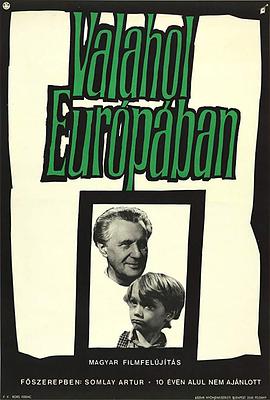
欧洲的某个地方海报图片

欧洲的某个地方

备注 :DVD
更新 :2025-12-25 17:58:59
1948·其它·剧情 ·1948-11-19上映·其它·
立即播放
收藏
8.0
网友评分
  • 很差
  • 较差
  • 还行
  • 推荐
  • 力荐
7.4350次评分
  • 很差
  • 较差
  • 还行
  • 推荐
  • 力荐
扫描观看

扫码查看主屏幕引导

  Somewhere in the remote region, the war ends. In the midst of ruined cities and houses in the streets, in rural hamlets, everywhere where people still live, are children who have lost their homes and parents. Abandoned, hungry, and in rags, defenseless and humiliated, they wander through the world. Hunger drives them. Little streams of orphans merge into a river which rushes forward and submerges everything in its path. The children do not know any feeling they know only the world of their enemies. They fight, steal, struggle for a mouthful of food, and violence is merely a means to get it. A gang led by Cahoun finds a refuge in an abandoned castle and encounters an old composer who has voluntarily retired into solitude from a world of hatred, treason, and crime. How can they find a common ground, how can they become mutual friends? The castle becomes their hiding place but possibly it will also be their first home which they may organize and must defend. But even for this, the price will be very high.  To this simple story, the journalist, writer, poet, scriptwriter, movie director, and film theoretician Béla Balázs applied many years of experience. He and the director Géza Radványi created a work which opened a new postwar chapter in Hungarian film. Surprisingly, this film has not lost any of its impact over the years, especially on a profound philosophical level. That is to say, it is not merely a movie about war it is not important in what location and in what period of time it takes place. It is a story outside of time about the joyless fate of children who pay dearly for the cruel war games of adults.  At the time it was premiered, the movie was enthusiastically received by the critics. The main roles were taken by streetwise boys of a children's group who created their roles improvisationally in close contact with a few professional actors, and in the children's acting their own fresh experience of war's turmoil appears to be reflected. At the same time, their performance fits admirably into the mosaic of a very complex movie language. Balázs's influence revealed itself, above all, in the introductory sequences: an air raid on an amusement park, seen in a montage of dramatic situations evoking the last spasms of war, where, undoubtedly, we discern the influence of classical Soviet cinematography. Shooting, the boy's escape, the locomotive's wheels, the shadows of soldiers with submachine guns, the sound of a whistle—the images are linked together in abrupt sequences in which varying shots and expressive sharp sounds are emphasized. A perfectly planned screenplay avoided all elements of sentimentality, time-worn stereotypes of wronged children, romanticism and cheap simplification. The authors succeeded in bridging the perilous dramatic abyss of the metamorphosis of a children's community. Their telling of the story (the scene of pillaging, the assault on the castle, etc) independently introduced some neorealist elements which, at that time, were being propagated in Italy by De Sica, Rossellini, and other film artists. The rebukes of contemporary critics, who called attention to "formalism for its own sake" have been forgotten. The masterly art of cameraman Barnabás Hegyi gives vitality to the poetic images. His angle shots of the children, his composition of scenes in the castle interior, are a living document of the times, and underline the atmosphere and the characters of the protagonists. The success of the picture was also enhanced by the musical art of composer Dénes Buday who, in tense situations, inserted the theme of the Marseilaise into the movie's structure, as a motive of community unification, as an expression of friendship and the possibility of understanding.  Valahol Europaban is the first significant postwar Hungarian film. It originated in a relaxed atmosphere, replete with joy and euphoria, and it includes these elements in order to demonstrate the strength of humanism, tolerance, and friendship. It represents a general condemnation of war anywhere in the world, in any form.
展开

    无模块

    资源列表

    排序

    相关明星

    相关影片

    更多
    白色花果
    White Flowers and Fruits‎ / 白花与果(港)
    离岸追查
    Eye Haïdara,梅拉尼·罗兰,拉斐尔·佩尔索纳,约瑟芬·约比
    寻她2023
    她 / Good Autumn, Mommy
    逆风草
    任明生,韩芮莹,何李帅克
    墙头记之少儿篇
    韩文庚,李继凯,王梦涵,王纪营,孙若馨,王光昊
    明亮的日子
    A Luminous Life / The Luminous Life
    木挽町复仇记
    柄本佑,渡边谦,长尾谦杜,北村一辉,濑户康史,泷藤贤一,高桥和也,正名仆蔵,山口马木也,爱希礼夏,井本绚子,野村周平,石桥莲司,泽口靖子
    湖海迷情
    宋星辰,特力克·尔斯汗,李一聪,加盆,塞力克拜·阿依恒
    单程夜航
    克拉克·肖特韦尔,凯莉·埃维斯顿-奎内特,艾拉·布勒·特拉沃塔,奥尔加·霍夫曼,约翰·特拉沃尔塔,凯莉·B·埃维斯顿,Miles McMahon,Samuel P. Espinoza
    你在山顶的那一边
    攀过山峰遇见你(港) / Climbing for Life
    执笔2025
    准备工作 / At Work
    大濛
    A Foggy Tale
    百万诱惑
    邵庄,王秀月,王冬,张路生,李洋,孟虹彤,付翠茹,李超,张金忠,李红梅
    蜱虫叮咬的真实之美
    佐伊·赵,考莉·埃尔南德斯,詹姆斯·库萨蒂-莫耶尔,杰里米·O·哈里斯
    山羊的救赎
    12岁的哈迪亚被迫嫁给了她埃及村庄的一位长老,她带着家里的山羊穿越沙漠寻找父亲,父亲很快开始用她已故母亲的声音和她说话
    嫁入旅馆世家的女子:年轻女掌柜的余香
    橘玛丽,吉田タケシ,竹内真琴,安藤ヒロキオ
    荒岛大逃亡
    刘乐妍,张文骏,颜瑜又,杨寒
    • 片名:欧洲的某个地方
    • 状态:DVD
    • 主演:Artúr Somlay Miklós Gábor Zsuzsa Bánki 
    • 导演:Radványi Géza 
    • 年份:1948
    • 地区:其它
    • 类型:剧情 
    • 频道:内详
    • 上映:1948-11-19
    • 语言:其它
    • 更新:2025-12-25 17:58
    • 简介:  Somewhere in the remote region, the war ends. In the midst of ruined cities and houses in the streets, in rural hamlets, everywhere where people still live, are children who have lost their homes and parents. Abandoned, hungry, and in rags, defenseless and humiliated, they wander through the world. Hunger drives them. Little streams of orphans merge into a river which rushes forward and submerges everything in its path. The children do not know any feeling they know only the world of their enemies. They fight, steal, struggle for a mouthful of food, and violence is merely a means to get it. A gang led by Cahoun finds a refuge in an abandoned castle and encounters an old composer who has voluntarily retired into solitude from a world of hatred, treason, and crime. How can they find a common ground, how can they become mutual friends? The castle becomes their hiding place but possibly it will also be their first home which they may organize and must defend. But even for this, the price will be very high.  To this simple story, the journalist, writer, poet, scriptwriter, movie director, and film theoretician Béla Balázs applied many years of experience. He and the director Géza Radványi created a work which opened a new postwar chapter in Hungarian film. Surprisingly, this film has not lost any of its impact over the years, especially on a profound philosophical level. That is to say, it is not merely a movie about war it is not important in what location and in what period of time it takes place. It is a story outside of time about the joyless fate of children who pay dearly for the cruel war games of adults.  At the time it was premiered, the movie was enthusiastically received by the critics. The main roles were taken by streetwise boys of a children's group who created their roles improvisationally in close contact with a few professional actors, and in the children's acting their own fresh experience of war's turmoil appears to be reflected. At the same time, their performance fits admirably into the mosaic of a very complex movie language. Balázs's influence revealed itself, above all, in the introductory sequences: an air raid on an amusement park, seen in a montage of dramatic situations evoking the last spasms of war, where, undoubtedly, we discern the influence of classical Soviet cinematography. Shooting, the boy's escape, the locomotive's wheels, the shadows of soldiers with submachine guns, the sound of a whistle—the images are linked together in abrupt sequences in which varying shots and expressive sharp sounds are emphasized. A perfectly planned screenplay avoided all elements of sentimentality, time-worn stereotypes of wronged children, romanticism and cheap simplification. The authors succeeded in bridging the perilous dramatic abyss of the metamorphosis of a children's community. Their telling of the story (the scene of pillaging, the assault on the castle, etc) independently introduced some neorealist elements which, at that time, were being propagated in Italy by De Sica, Rossellini, and other film artists. The rebukes of contemporary critics, who called attention to "formalism for its own sake" have been forgotten. The masterly art of cameraman Barnabás Hegyi gives vitality to the poetic images. His angle shots of the children, his composition of scenes in the castle interior, are a living document of the times, and underline the atmosphere and the characters of the protagonists. The success of the picture was also enhanced by the musical art of composer Dénes Buday who, in tense situations, inserted the theme of the Marseilaise into the movie's structure, as a motive of community unification, as an expression of friendship and the possibility of understanding.  Valahol Europaban is the first significant postwar Hungarian film. It originated in a relaxed atmosphere, replete with joy and euphoria, and it includes these elements in order to demonstrate the strength of humanism, tolerance, and friendship. It represents a general condemnation of war anywhere in the world, in any form.
    视频
    搜索历史
    删除
    热门搜索
    本地记录